Ceiling Patient Lifts vs. Portable Patient Lifts: What’s the Difference?
Safer Transfers Start with the Right Support
For families and caregivers, transfers can quickly become one of the most physically demanding parts of daily care. Moving from a bed to a wheelchair, helping someone into the bathroom, or assisting with standing can place significant strain on both the caregiver and the patient.
The right patient lift can make those moments safer, smoother, and more comfortable for everyone involved.
When exploring options, many people compare ceiling patient lifts with portable patient lifts, including sit-to-stand lifts and Hoyer-style floor lifts. Each serves an important purpose, but the best fit depends on mobility level, caregiver needs, home setup, and long-term goals.
Understanding the differences can help families feel more confident moving forward.

What Is a Ceiling Patient Lift?
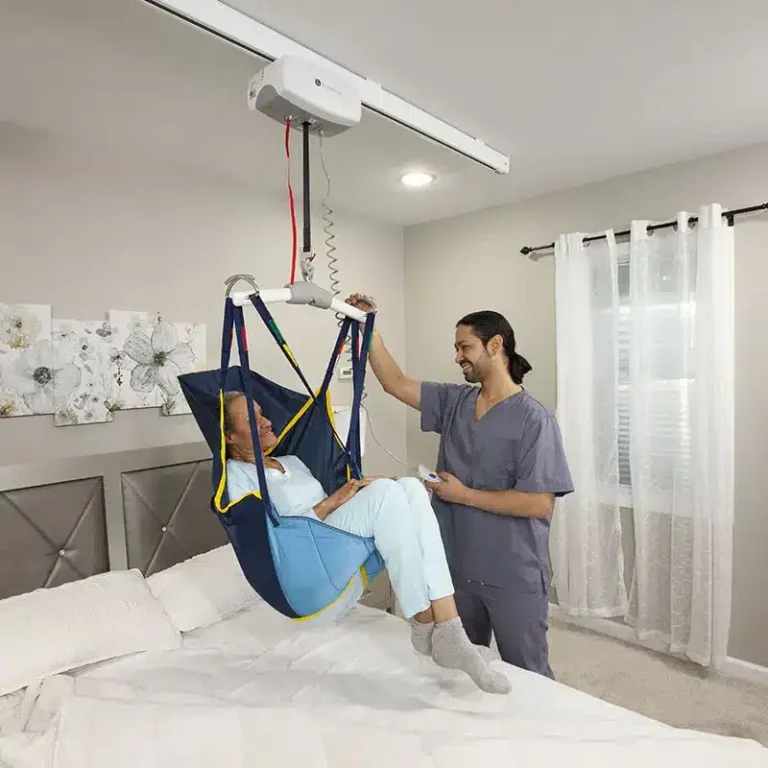
A ceiling patient lift uses an overhead track system mounted to the ceiling to help safely transfer a patient between locations. These systems reduce physical lifting for caregivers while creating smoother, more controlled movement for the patient.
Ceiling lifts can be installed in:
- Bedrooms
- Bathrooms
- Hallways
- Living spaces
- Multiple connected rooms
Depending on the setup, track systems may run in a straight path or be customized to move throughout larger areas of the home.
At HME Home Medical, ceiling track systems are available with both fixed motors and portable motors, offering flexibility based on the patient’s needs and the home environment.
Fixed Motor Ceiling Lifts
A fixed motor ceiling lift keeps the lifting motor permanently attached to the track system.
Benefits include:
- Always ready to use
- Smooth, consistent operation
- Minimal setup between transfers
- Ideal for frequent daily use
- Reduced caregiver strain
Fixed motor systems are especially helpful for patients who require regular transfers throughout the day and for caregivers who want the most streamlined experience possible.
Because the motor remains on the track, there’s less equipment to move or reposition during transfers.
Portable Motor Ceiling Lifts
A portable motor ceiling lift allows the motor unit to be detached and moved between track systems.
This option provides flexibility for households that may have:
- Multiple track locations
- Limited budget for multiple motors
- Changing care needs over time
Portable motors can often be transferred from room to room while still providing the benefits of an overhead ceiling system.
For many families, this creates a balance between convenience and cost-effectiveness.
Benefits of Ceiling Patient Lifts
Ceiling lifts offer advantages for both the patient and caregiver, especially when long-term or frequent transfers are involved.
Reduced Physical Strain for Caregivers
One of the biggest benefits is reducing the need for manual lifting. Transfers that once required significant physical effort become smoother and safer, lowering the risk of caregiver injury.
More Comfortable Transfers
Ceiling lifts create controlled, steady movement that often feels more secure and less jarring for patients.
Better Access in Tight Spaces
Because the lift operates overhead, there’s no large base or legs taking up floor space. This can make a major difference in smaller bedrooms or bathrooms.
Improved Safety
Reducing manual lifting and awkward positioning helps minimize fall risks during transfers.
Greater Long-Term Accessibility
Ceiling track systems can support changing mobility needs over time, helping patients remain safely at home longer.
What Is a Portable Patient Lift?
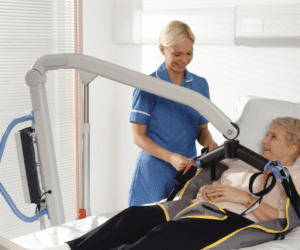
A portable patient lift is a movable floor-based lift that can be wheeled between locations as needed. These lifts do not require ceiling installation, making them a flexible option for many homes.
The two most common types are:
- Sit-to-stand lifts
- Hoyer-style full-body lifts
Each serves different mobility levels and transfer needs.
Sit-to-Stand Lifts
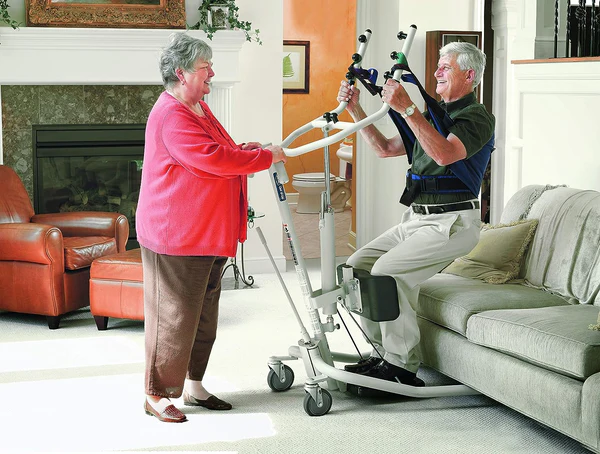
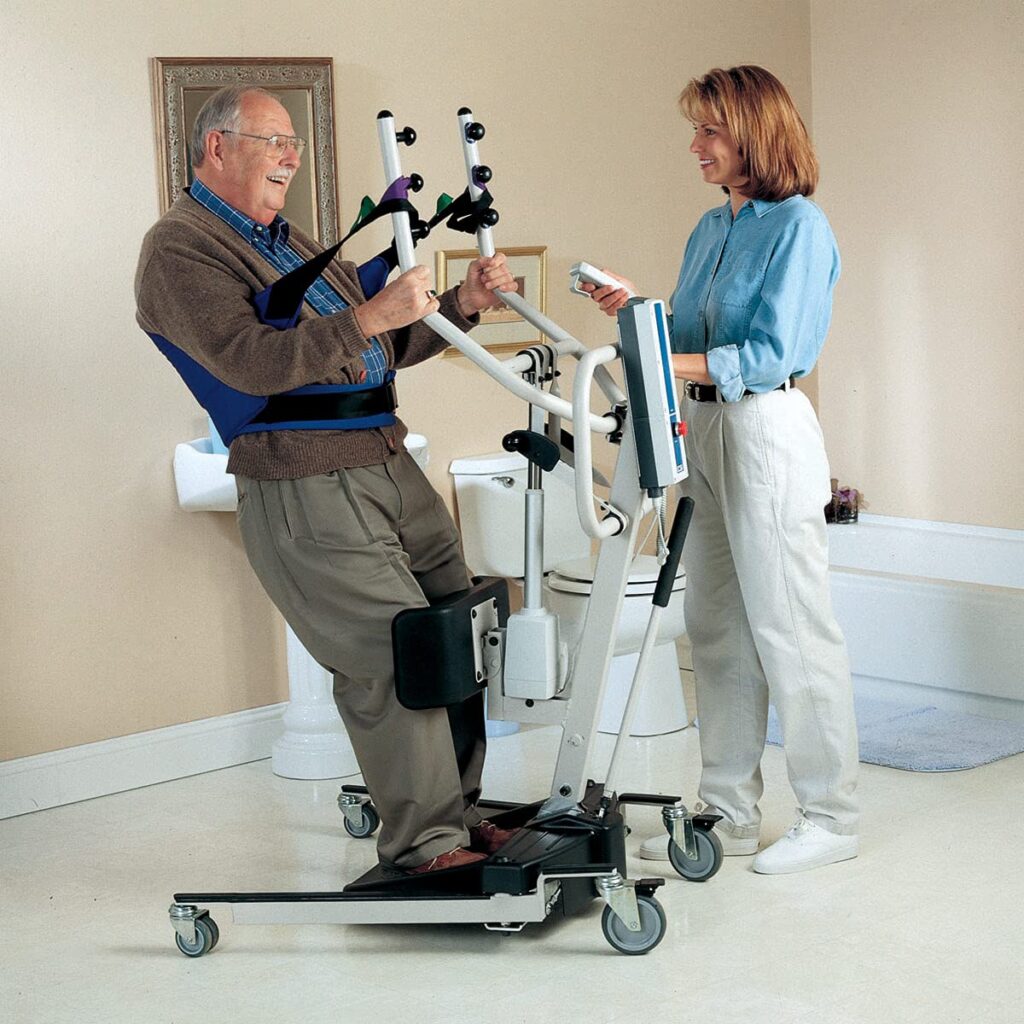
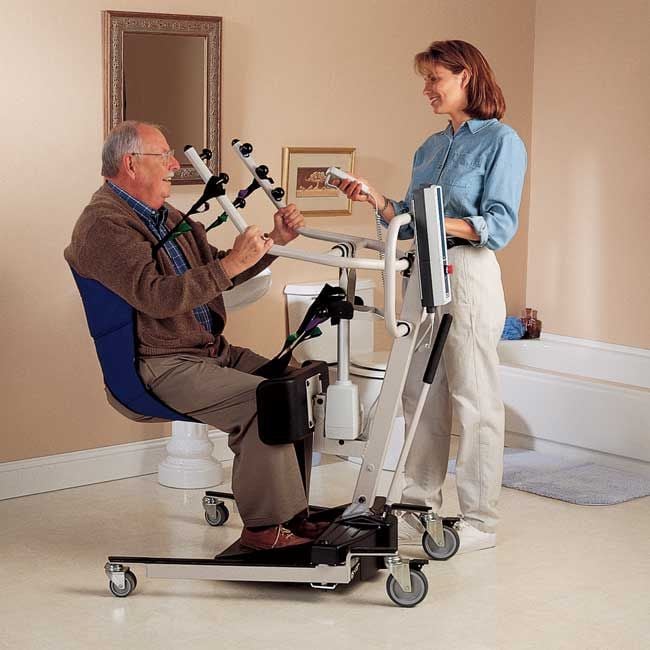
A sit-to-stand lift helps partially weight-bearing individuals move from sitting to standing with caregiver assistance.
These lifts are often used for:
- Transfers between bed and chair
- Toilet transfers
- Individuals with some leg strength remaining
Benefits of sit-to-stand lifts include:
- Encouraging patient participation during transfers
- Supporting dignity and independence
- Smaller footprint than full-body lifts
- Faster, simpler transfers in some situations
For caregivers, sit-to-stand lifts can significantly reduce strain while still allowing the patient to stay actively involved in movement.
Hoyer-Style Full-Body Lifts
A Hoyer lift (also called a full-body patient lift) is designed for individuals who require complete transfer assistance.
These lifts use a sling system to fully support the patient during movement between surfaces.
Benefits include:
- Safe transfers for non-weight-bearing patients
- Flexibility to move between rooms
- No home modifications required
- Lower upfront installation cost compared to ceiling systems
Hoyer lifts remain one of the most widely used transfer solutions because of their versatility and portability.
Comparing Ceiling Lifts and Portable Patient Lifts
Both options improve safety and mobility support, but the day-to-day experience can feel very different.
Ceiling Patient Lifts Often Provide:
- Smoother transfers
- Less caregiver effort
- Better use of floor space
- Faster daily routines
- More permanent accessibility solutions
Portable Patient Lifts Often Provide:
- Greater flexibility between locations
- No installation requirements
- Lower initial investment
- Easier setup for temporary needs
- Rental equipment options
The right choice often depends on how frequently transfers happen, the patient’s mobility level, and the physical setup of the home.
Considering the Caregiver Experience
When discussing patient lifts, it’s easy to focus only on the equipment itself. But caregiver well-being matters, too.
Repeated manual transfers can lead to:
- Back strain
- Shoulder injuries
- Fatigue
- Increased fall risk for both parties
The right lift system can dramatically reduce physical stress while also improving confidence during transfers.
For many families, that peace of mind becomes just as valuable as the equipment itself.
Choosing the Right Lift for Your Home
No two care situations are exactly alike. The best patient lift depends on several factors, including:
- The patient’s mobility level
- Whether the patient can assist with standing
- Frequency of transfers
- Home layout and available space
- Number of caregivers involved
- Long-term care goals
At HME Home Medical, our team works closely with patients, caregivers, and healthcare providers to help identify solutions that fit both current and future needs. For patients considering a ceiling lift, we offer free in-home consultations to determine if this option will work with your space and needs.
Personalized Support Makes the Process Easier
Patient lifts can feel intimidating at first, especially for families navigating home care for the first time. Having experienced guidance can make the process feel far more manageable.
HME Home Medical offers support with:
- Product selection
- Home accessibility considerations
- Lift and sling options
- Training and education
- Insurance questions when applicable
Whether you’re exploring a ceiling patient lift, sit-to-stand lift, or Hoyer lift, the goal stays the same: creating safer, more comfortable daily care for everyone involved.
Find the Right Patient Lift for Your Home
Every caregiving situation is different. Our team can help you compare ceiling lifts, sit-to-stand lifts, and portable patient lifts to find a solution that supports both safety and independence at home.